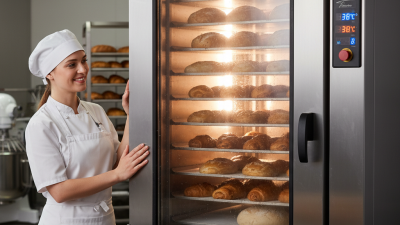
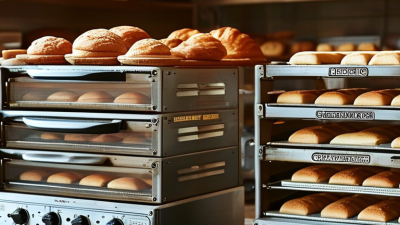
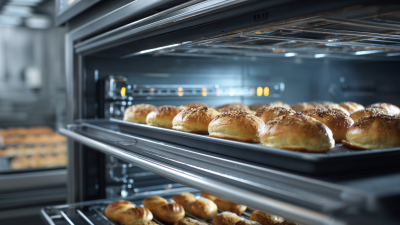
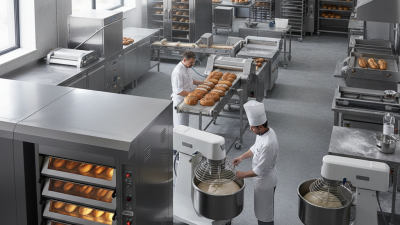
China’s proofer oven industry is expanding with bakery automation, energy control, and flexible production needs. The global bakery processing equipment market was valued at approximately USD 14.9 billion in 2023, according to Grand View Research. Its report expects steady growth through 2030, supported by packaged bread, frozen dough, and industrial pastry demand. A proofer oven now serves more than simple fermentation. It manages humidity, temperature, airflow, and production timing.
Michael Suas, founder of the San Francisco Baking Institute, describes proofing as “the last opportunity to control the dough before baking.” This practical view matters to global buyers. A small temperature error can produce pale crusts, weak volume, or uneven crumb. Consider a tray of croissants leaving the chamber: butter should remain stable, layers should stay visible, and dough should feel aerated rather than collapsed. These details separate a reliable machine from a polished brochure.
This guide examines China’s top 10 proofer oven types for international buyers. It compares cabinet proofers, tunnel proofers, retarder proofers, spiral systems, and customized industrial units. Key factors include temperature accuracy, humidity recovery, stainless-steel construction, cleaning access, control systems, and after-sales support. MarketsandMarkets identifies automation and energy efficiency as important bakery equipment trends. However, specifications alone cannot guarantee results. Installation quality, water treatment, operator training, and recipe adaptation still matter. Some buyers may focus too heavily on price. That can be an expensive mistake. A lower purchase cost may hide higher energy use, uneven airflow, or difficult maintenance. This review offers useful direction, but real factory trials remain essential before final selection.
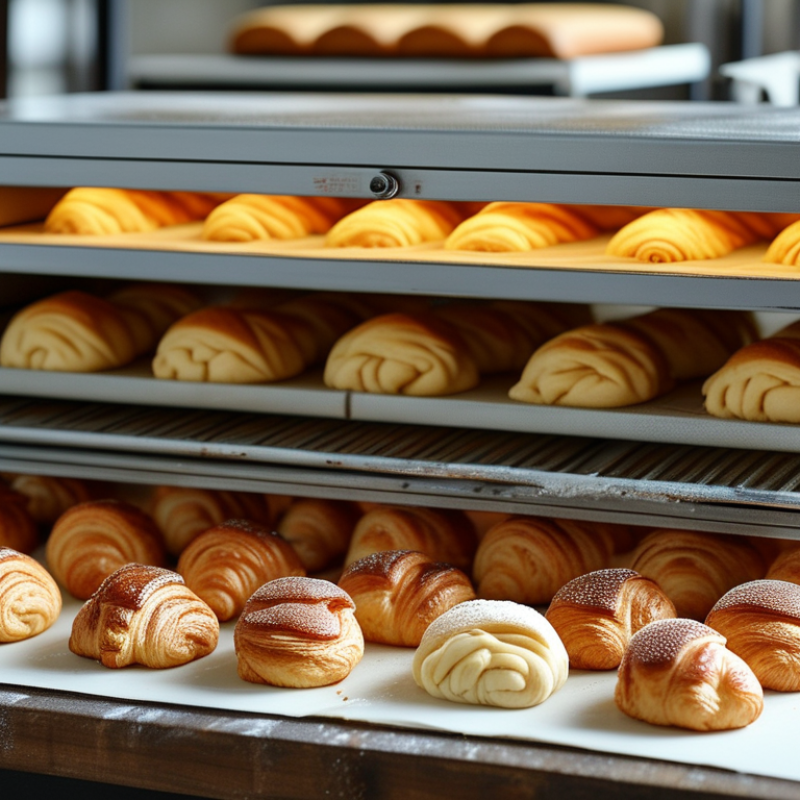
A proofer oven is a controlled chamber for fermenting shaped dough before baking. It manages temperature, humidity, airflow, and time. Yeast converts sugars into carbon dioxide, creating the dough’s internal structure. A typical final-proof setting stays near 32–38°C, with relative humidity around 75–85%, depending on flour, yeast, and product design. The setpoint is not sacred.
The process is simple, but control is not. Warm air supports yeast activity, while humid air prevents a dry skin from forming. Fans distribute heat and moisture across trays. Sensors then adjust heaters, steam, and ventilation.
If humidity drops, the surface may crack. If it rises too far, dough can become sticky and weak. Operators should check dough volume, surface feel, and core temperature, not trust the display alone.
Grand View Research valued the global bakery-products market at approximately 521.5 billion dollars in 2023, indicating strong demand for consistent production equipment. PMMI’s 2024 food-and-beverage equipment trends also emphasize automation, sanitation, and energy efficiency. These findings matter to global buyers because a proofer must perform reliably across different climates. A humid coastal factory and a dry inland bakery need different control responses. Small details matter. Temperature uniformity, door sealing, cleaning access, and recovery time deserve practical testing before purchase.
China’s ten main proofer oven types serve different bakery production needs.
Cabinet proofers suit small batches and flexible recipes.
Rack proofers handle wheeled trays efficiently.
Tunnel proofers support steady, high-volume production.
Spiral proofers save floor space in compact factories.
Retarder proofers combine chilling and controlled fermentation overnight.
Tray proofers offer simple loading for standard products.
Continuous conveyor proofers maintain smooth movement between production stages.
Modular chamber proofers allow capacity expansion later.
Mobile proofers help small bakeries change layouts quickly.
Steam-injection proofers create stable moisture during fermentation.
In practical purchasing, the machine’s internal temperature should remain consistent across shelves.
Humidity recovery also matters after frequent door opening.
Stainless steel interiors simplify cleaning and reduce hidden residue.
Buyers should check insulation thickness, sensor accuracy, control language, voltage, and spare-part access. These details often affect operating costs more than the advertised heating power.
A proofer is not always an oven.
Combination units exist, but their controls require careful testing.
Some suppliers describe similar machines differently.
That can confuse comparisons.
Request factory videos, test records, and sample production before ordering.
I would also inspect door seals personally.
A small leak can cause uneven dough development.
No specification sheet replaces a real trial.
Proofer ovens vary mainly through heating response and humidity control. Ten common configurations include cabinet, rack, tunnel, continuous, retarder-proofer, modular, spiral, tray, steam-assisted, and hybrid systems.
Electric heaters offer precise temperature changes. Gas systems may deliver stronger heat, but airflow needs careful balancing. Hot-water coils provide gentler heating. Infrared units react quickly, yet exposed dough can dry unevenly.
Most commercial dough proofing operates near 32–38°C and 75–85% relative humidity. These figures are practical starting points, not universal rules. Flour strength, dough hydration, yeast activity, and loading density change the result.
The ASHRAE Handbook—HVAC Applications, 2023, stresses dew-point management and uniform air distribution in humid process spaces. A poorly positioned fan can create a dry crust on one tray and condensation on another. Small details matter.
Steam injection raises humidity quickly, while atomizing nozzles offer finer control. Retarder-proofers combine cooling and warming, helping schedule overnight production.
Codex Alimentarius, General Principles of Food Hygiene, 2022 revision, emphasizes monitored temperatures, cleanable surfaces, and controlled process conditions.
Buyers should request logged temperature and humidity data, not only catalog specifications. One weakness remains. Many factory tests use empty chambers.
Test with full racks, varied tray heights, and a complete production cycle before approval.
China Top 10 Proofer Oven Types for Global Buyers
How to Choose the Right Proofer Oven for Your Bakery
Choosing a proofer oven starts with your dough, not the machine’s appearance. A small artisan bakery may need a cabinet proofer, while a large plant may require a rack, conveyor, spiral, or retarder proofer. Each type manages different batch sizes, loading methods, and production speeds. Measure your daily output carefully. An oversized chamber can waste energy and floor space.
Control accuracy matters during real production. Look for stable temperature, adjustable humidity, and even airflow across every tray. For enriched dough, moisture control helps prevent dry skins and uneven expansion. A working range near 30–40°C suits many bread recipes, but your formula may need different settings. Place a probe near the center rack during testing. The display alone may not reveal cold corners.
Cleaning and maintenance deserve equal attention. Choose smooth internal surfaces, removable shelves, accessible drains, and corrosion-resistant materials. Check door seals after repeated opening. A proofer that performs well during a factory demonstration may behave differently beside a hot oven. Leave service clearance around the unit, and confirm local voltage, ventilation, water quality, and safety requirements. Noise can also affect staff comfort. I would not choose capacity from one busy day. Seasonal demand, operator habits, and future recipes can change the calculation. A short trial with your actual dough often exposes problems that brochures miss.
| No. | Proofer Oven Type | Typical Capacity | Typical Temperature Range | Typical Humidity Range | Heating & Humidification | Main Advantages | Best Application | Key Buying Considerations |
|---|---|---|---|---|---|---|---|---|
| 1 | Standard Cabinet Proofer | 8–32 trays; approximately 1–4 rack loads | 30–45°C | 70–90% RH | Electric heating with water pan, steam generator, or atomizing humidifier | Compact, economical, simple to operate, and easy to install | Small bakeries, cafés, restaurants, and test kitchens | Check tray dimensions, insulation, humidity control, door sealing, and electrical compatibility |
| 2 | Retarder Proofer | 1–4 racks; approximately 16–64 trays | Cooling: 2–10°C; proofing: 25–40°C | 70–90% RH during proofing | Refrigeration, electric heating, and controlled steam or humidification | Combines dough chilling, holding, and scheduled proofing in one unit | Retail bakeries needing overnight production and early-morning baking | Evaluate refrigeration capacity, programmable cycles, defrost method, and floor drainage |
| 3 | Rack Proofer | 1–8 mobile racks; approximately 16–128 trays | 30–45°C | 75–90% RH | Fan-assisted electric heating with steam generator or humidifier | High loading flexibility, good airflow, and efficient rack handling | Medium-sized bakeries, supermarkets, and central production rooms | Match internal width and floor loading with rack size; verify airflow uniformity |
| 4 | Walk-In Proofer Room | 8–40 racks; more than 128 trays | 28–42°C | 75–95% RH | Remote or packaged air-handling system with steam or mist humidification | Large capacity, adaptable layout, and suitable for continuous production | Industrial bakeries, commissaries, and central kitchens | Plan insulation, air distribution, sanitation, access doors, drainage, and installation space |
| 5 | Continuous Tunnel Proofer | Approximately 300–2,000 kg of dough per hour | 30–42°C | 75–90% RH | Multi-zone air circulation with electric, gas, or hot-water heating and steam humidification | Stable residence time, automatic transfer, and high production efficiency | High-volume bread, bun, roll, and laminated-dough lines | Specify belt width, residence time, product spacing, zone control, and line integration |
| 6 | Tray-Type Proofer | 12–96 trays, depending on cabinet size | 30–45°C | 70–90% RH | Electric heating with water reservoir, steam injection, or ultrasonic humidification | Direct tray loading, straightforward cleaning, and flexible batch production | Bakeries producing pastries, buns, rolls, and specialty products in batches | Confirm tray pitch, tray material compatibility, condensation control, and usable height |
| 7 | Spiral Proofer | Approximately 100–1,000 kg of dough per hour | 30–42°C | 75–90% RH | Recirculated conditioned air with steam or mist humidification | Long proofing time in a relatively compact floor area; continuous operation | Automated production lines with limited floor length | Assess belt sanitation, turning radius, product transfer height, access for maintenance, and noise |
| 8 | Modular Proofer | Approximately 200–1,500 kg of dough per hour | 28–42°C | 75–90% RH | Independent air, heating, and humidity zones assembled in configurable sections | Scalable layout, easier expansion, and adaptable line integration | Growing plants with changing capacity requirements | Review module dimensions, future expansion options, controls, and transportation limitations |
| 9 | Multi-Deck Proofer | 2–6 decks; approximately 24–144 trays | 30–45°C | 70–90% RH | Electric heating with independent or shared humidity distribution | Uses vertical space efficiently and supports separate product batches | Urban bakeries and facilities where floor space is limited | Check loading ergonomics, deck temperature balance, ceiling height, and lift or trolley access |
| 10 | Proofing-and-Baking Combination Unit | 4–16 trays per batch | Proofing: 30–40°C; baking: typically 150–250°C | Proofing: 70–90% RH; baking humidity varies by recipe | Electric heating with integrated humidity system and programmable controls | Saves space, reduces product handling, and supports small-batch consistency | Cafés, hotels, convenience stores, and compact retail bakeries | Compare chamber size, recovery time, steam performance, cleaning access, and recipe programming |
China Top 10 Proofer Oven Types for Global Buyers
Before importing a proofer oven, match its design to your production process. Cabinet, tunnel, retarder, and modular models serve different bakery layouts. Check tray dimensions, batch capacity, temperature range, and humidity control. A machine that fits the catalog may not fit your actual trays. Small details matter.
Ask for the electrical specification before discussing price. Confirm voltage, frequency, phase, plug type, heating power, and control-panel language. These details affect installation and operating cost. Check whether the oven uses steam, water injection, or a humidity generator. Request humidity accuracy data, not only attractive product photographs. Drainage is often overlooked. Wet floors create practical problems.
Review construction carefully. Stainless steel contact surfaces, door seals, insulation thickness, fan direction, and interior lighting influence daily reliability. Request factory testing records, wiring diagrams, spare-parts lists, and installation instructions. Independent safety certificates may be required in your market, so verify their scope and validity. Ask about export packaging, container loading, warranty response, and remote troubleshooting. In sourcing work, I have seen buyers focus too heavily on capacity. That choice can increase energy use and maintenance. Test a sample batch when possible. A perfect specification sheet cannot replace real dough trials.