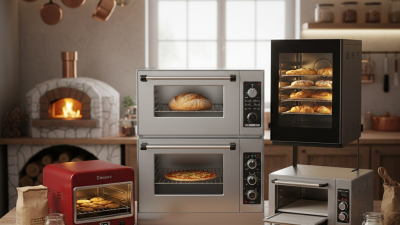
Choosing a bread deck oven in 2026 is not simply a matter of buying the hottest machine. It is about matching heat behavior, production volume, floor space, and the baker’s daily rhythm. A small neighborhood bakery may need steady electric heat, while a high-volume plant may prioritize gas efficiency and rapid recovery. Wood-fired models offer aroma and visual appeal, but they demand skilled firing and careful temperature control. Each type has a different personality.
Oven builder Alan Scott often said, “The oven is the heart of the bakery.” That idea still feels practical. A deck oven shapes the loaf through intense bottom heat, radiant heat, and controlled steam. Watch the crust. Listen to the door seal. Notice how quickly the stone recovers after loading. These details reveal more than a product brochure. They also expose a common mistake: assuming every “professional” oven performs equally under pressure.
This guide examines the leading bread deck oven types expected to influence bakeries in 2026. It compares electric, gas, wood-fired, and hybrid systems through heating consistency, energy use, maintenance, installation demands, and bread quality. The ranking is not absolute. It should not be. A sourdough specialist, hotel bakery, and frozen-dough producer may choose completely different equipment. Some claims require closer testing, especially when manufacturers report performance under ideal conditions. Real kitchens are messier. Flour dust settles, doors open constantly, and rushed staff change results. The best bread deck oven is therefore the one that remains dependable during ordinary, imperfect service.
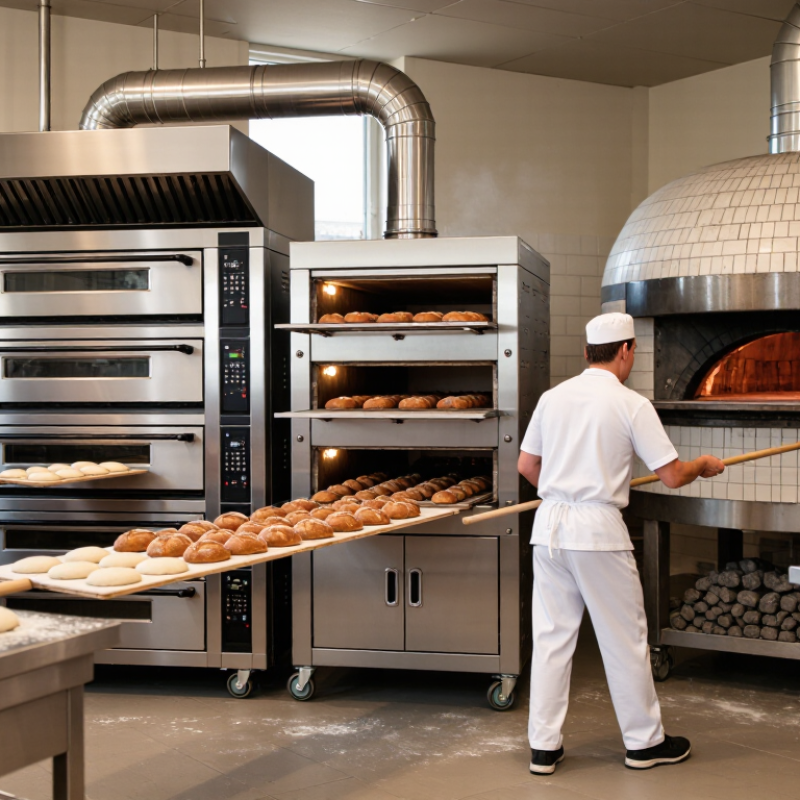
What Are the 2026 Top Bread Deck Oven Types?
A bread deck oven heats dough on a solid baking surface inside a closed chamber. Heat reaches the loaf through conduction, radiant energy, and controlled airflow. The deck transfers strong bottom heat, while the chamber supports crust formation. Steam keeps the surface flexible during oven spring. Without enough steam, crust can set too early. That small detail changes loaf volume and scoring results.
Electric deck ovens remain practical for bakeries needing stable temperature control and easier installation. Gas deck ovens can recover heat quickly, especially during busy production periods. Their combustion systems require careful ventilation and regular professional inspection. Stone or masonry deck ovens store heat in thick surfaces and deliver a distinctive, powerful bake. They also respond slowly when operators change settings. That delay matters.
In 2026, the most useful type depends on batch size, fuel access, product range, and staff skill. Single-deck models suit small production and tighter spaces. Multi-deck ovens increase output, but loading patterns can create uneven results. Some units add convection airflow for faster, more uniform baking. However, excessive airflow may dry delicate crusts. My own first assumption was that higher heat always improved bread. It did not. Even a technically advanced oven needs accurate loading, measured steam, calibrated sensors, and disciplined observation. Temperature displays can be misleading. A test loaf tells more.
Bread deck ovens transfer heat through the baking surface, radiant heat from the chamber, and, in some designs, forced air or steam. The chart compares common operating-temperature ranges for the main deck oven types; actual settings vary by model, recipe, bread size, and bake profile.
How they work: Electric and gas deck ovens heat a stone or steel deck and the surrounding chamber. Steam-tube ovens circulate heated fluid through tubes above and below the baking chamber for stable, even heat. Wood-fired ovens use stored masonry heat, direct radiation, and combustion gases, allowing higher-temperature baking for products such as hearth loaves and pizza-style breads.
In 2026, electric stone-deck ovens stand out for consistent heat and precise temperature control. They suit artisan bakeries producing sourdough, baguettes, and enriched loaves. Independent deck temperatures help staff bake different products at once. A stone surface supports firm bottoms and even crust color. In daily use, operators still need to watch loading speed and steam levels. Small timing errors can change the crumb.
Gas-heated deck ovens remain valuable where strong radiant heat matters. They often recover quickly after frequent door opening, which helps during busy production periods. Bakers can adjust top and bottom heat for darker crusts or softer rolls. However, gas systems may require more ventilation planning and careful maintenance. That trade-off deserves attention. Lower purchase costs do not always mean lower operating costs.
Hybrid deck ovens are gaining interest because they combine flexible heating options with modern controls. Some kitchens use electric heat for steady production and supplementary gas heat for demanding batches. Multi-deck configurations also save floor space while separating baking temperatures. Digital sensors can record chamber heat, baking time, and steam cycles, supporting repeatable results. Still, automation cannot replace practical judgment. I have found that dough hydration, tray placement, and opening habits often matter more than the control panel. A technically advanced oven may disappoint when the workflow is poorly matched to its capacity.
What Are the 2026 Top Bread Deck Oven Types?
Electric, gas, and wood-fired deck ovens create different baking environments. Electric models provide stable heat across the stone, which helps produce consistent crust color and crumb structure. They also suit urban bakeries because they produce no onsite combustion emissions. ENERGY STAR reports that certified commercial ovens can use at least 20% less energy than standard models. However, electricity costs and peak-demand charges may change the real savings.
Gas deck ovens heat quickly and recover well after frequent door openings. They fit busy production schedules, especially when natural gas infrastructure is reliable. Their flame can create stronger bottom heat, but temperature control may need closer attention. Wood-fired ovens offer intense radiant heat and subtle smoky notes. The trade-off is labor. Operators must manage fuel, ash, airflow, and uneven heating. The 2024 World Energy Outlook from the International Energy Agency also highlights continuing energy-price uncertainty, so fuel stability deserves more attention than many buying guides suggest.
Tips: Measure recovery time during a real production shift. Check heat zones with an infrared thermometer. I would not trust a single efficiency number. Flour loading, door habits, insulation, and maintenance can change results. A small electric oven may outperform a larger gas model in daily efficiency. Wood can still win on flavor, but not always on labor.
| Comparison Dimension | Electric Deck Oven | Gas Deck Oven | Wood-Fired Deck Oven |
|---|---|---|---|
| Primary Heat Source | Electric heating elements located above, below, or around each baking chamber. | Burners powered by natural gas or liquefied petroleum gas, with heat transferred through the chamber. | Seasoned wood burned inside or adjacent to the baking chamber; retained heat is stored in the masonry or deck. |
| Typical Baking Temperature | Approximately 180–300°C (350–570°F) for most bread production; some units reach about 350°C (660°F). | Approximately 180–320°C (350–610°F), depending on burner design, insulation, and chamber configuration. | Approximately 250–450°C (480–840°F); higher temperatures are possible for specific products and oven designs. |
| Temperature Control | Very precise and repeatable. Independent top and bottom heat controls are commonly available. | Generally accurate, although burner cycling and gas pressure can affect temperature stability. | Manual and skill-dependent. Heat must be managed through fuel quantity, airflow, ember placement, and venting. |
| Heat-Up Time | Usually about 30–90 minutes, depending on chamber size, insulation, and target temperature. | Usually about 30–75 minutes, depending on burner capacity and oven mass. | Often about 1–3 hours because the oven floor and masonry need to absorb and stabilize heat. |
| Heat Recovery After Loading | Fast and consistent when the heating elements have sufficient capacity and the door is well insulated. | Fast recovery is possible, but performance depends on burner output and the oven’s thermal mass. | Very strong heat retention, but recovery depends on the stored heat and the operator’s fire management. |
| Baking Profile | Clean, stable heat that supports consistent crust color, oven spring, and crumb development. | Responsive heat with good production capacity; the baking profile can vary with burner settings and airflow. | Distinctive radiant and conductive heat that can produce a deeply colored crust and subtle wood-fired aroma. |
| Steam Capability | Steam injection is commonly available and easy to control on commercial models. | Steam injection is commonly available; the boiler or generator may require additional utilities. | Steam may be supplied by a separate system or manual methods, but humidity control is usually less automated. |
| Energy Efficiency | Efficient for intermittent production because the oven can be switched off or operated by zone; efficiency depends on electricity generation. | Can provide efficient high-output heating, but combustion creates exhaust heat and requires ventilation. | Excellent thermal retention after a long firing period, but efficiency varies with wood moisture, insulation, and firing technique. |
| Operating Cost Factors | Electricity tariff, connected load, demand charges, and preheating frequency. | Gas price, ventilation energy, burner maintenance, and local fuel availability. | Dry hardwood cost, storage, labor for firing, chimney maintenance, and ash removal. |
| Installation Requirements | Suitable electrical supply, correct circuit protection, adequate floor strength, and required clearances. | Gas connection, combustion-air supply, exhaust ventilation, gas safety controls, and code-compliant installation. | Non-combustible construction, chimney or flue system, combustion-air supply, fire protection, and dedicated wood storage. |
| Ventilation Requirements | Usually no combustion exhaust, but local regulations may require general kitchen ventilation and steam removal. | Combustion exhaust and kitchen ventilation are required in most commercial installations. | Substantial smoke and combustion exhaust management are required, typically through a properly designed chimney system. |
| Ease of Operation | High. Digital controls and programmable settings make it suitable for standardized production. | Moderate to high. Operators must monitor burner operation, gas pressure, and chamber temperature. | Moderate to low. Skilled operators are needed to build, maintain, and adjust the fire. |
| Production Consistency | Excellent for repeatable recipes, multi-shift production, and precise baking schedules. | Very good when burners, thermostats, and ventilation are correctly maintained. | Variable but highly controllable by experienced bakers; natural heat variation can be part of the product style. |
| Typical Capacity Format | Single or multiple decks, often with separate temperature and steam controls for each deck. | Single or multiple decks; suitable for medium- to high-volume bread production. | Usually one large masonry baking chamber, although some commercial designs include multiple chambers. |
| Best Suited For | Retail bakeries, hotels, restaurants, commissaries, and operations prioritizing control and repeatability. | High-volume bakeries and food-service operations with access to gas and suitable exhaust infrastructure. | Artisan bakeries, restaurants, and specialty producers seeking traditional baking characteristics and visual appeal. |
| Main Advantages | Precise control, clean operation, easy installation compared with combustion ovens, and predictable results. | Strong heating performance, fast recovery, and potentially favorable operating costs where gas is economical. | High heat retention, distinctive crust development, strong visual appeal, and authentic wood-fired character. |
| Main Limitations | High electrical demand may require upgraded infrastructure; operating cost can be sensitive to electricity prices. | Requires gas infrastructure and combustion ventilation; installation and safety compliance can be complex. | Longer preparation time, greater labor requirements, smoke management, fuel storage, and less automated control. |
| Maintenance Priorities | Heating elements, thermostats, door seals, steam system, and chamber surfaces. | Burners, ignition system, thermostats, gas valves, door seals, and exhaust pathways. | Chimney, flue, refractory surfaces, door seals, ash removal areas, and structural joints. |
| Environmental Considerations | Direct on-site emissions are low, but the overall footprint depends on the electricity source. | Produces combustion emissions, including carbon dioxide and nitrogen oxides; efficiency varies by burner system. | Uses a renewable fuel when responsibly sourced, but produces smoke and particulate emissions that require management. |
| Overall 2026 Position | Best all-round choice for precision, flexibility, and operational consistency. | Strong choice for high-throughput production where gas and ventilation infrastructure are available. | Best choice for distinctive artisan products and traditional wood-fired baking experiences. |
What Are the 2026 Top Bread Deck Oven Types?
Choosing a deck oven starts with the bread, not the catalogue. Grand View Research values the global bakery products market at about $513 billion in 2023, with continued growth through 2030. That pressure rewards flexible equipment, but bigger is not always better.
Electric stone-deck ovens suit sourdough, baguettes, and small-batch loaves. They provide steady heat across a compact baking chamber. Independent temperature controls help operators manage different breads during one shift. Gas-fired deck ovens fit larger volumes and heavier production schedules. Their strong radiant heat can create dark crusts quickly. However, gas performance depends on ventilation, fuel pricing, and local installation rules. Steam injection matters for glossy crusts. Without enough steam, even excellent dough may look dull.
High-volume bakeries may prefer multi-deck systems with automated loading. They save floor space and reduce repeated handling. Thermal recovery becomes important here. The International Energy Agency’s Energy Efficiency 2024 report states that global energy-intensity improvement reached about 2.2% in 2023. That figure is not bakery-specific, but it signals tighter attention to operating waste. Track heat-up time, idle consumption, bake loss, and recovery after loading. Real measurements beat brochure promises.
A practical match is simple: electric for control, gas for intense throughput, and automated decks for repeatability. Still, this decision is rarely perfect. Test the oven with your own dough, trays, steam routine, and busiest production hour. Small details decide the result.
What Are the 2026 Top Bread Deck Oven Types?
What to Evaluate Before Choosing a 2026 Deck Oven
Electric, gas, modular, and rotating deck ovens remain strong choices for bread production in 2026. The best type depends on your dough volume, shop layout, energy supply, and baking schedule. A compact electric oven may suit an artisan bakery with steady daily output. A gas model can deliver fast recovery, but ventilation and installation require careful planning. Modular decks offer flexibility when production grows.
Start with heat stability, not appearance. Ask how evenly the oven holds temperature across each deck. Test baguettes, loaves, and enriched dough during a busy cycle. Check the crust color near the door and rear wall. Small differences can become expensive waste. Steam performance also matters. Strong, controlled steam supports thinner crusts and better oven spring.
In my experience, operators often underestimate loading height and door clearance. Measure them with trays in hand. Review insulation, cleaning access, control accuracy, and service support before purchase. A beautiful test bake can mislead. Your dough may behave differently tomorrow. I would also compare recovery time after three full loads, not one empty preheat. Energy use deserves attention, but the cheapest oven may cost more through uneven baking, repairs, or slow production. Leave room for doubt. A practical trial reveals more than a sales sheet.