Top 10 Commercial Deck Oven Brands for Global Buyers
Choosing a commercial deck oven is rarely a simple brand comparison. Global buyers must weigh baking consistency, chamber size, heat recovery, installation needs, and after-sales support. A polished brochure cannot reveal how evenly a stone deck holds 400°C during busy service. Real decisions often begin with practical questions. Can local technicians service the controls? Are replacement heating elements available? Will the oven fit the ventilation plan and power supply? These details separate a reliable purchase from an expensive interruption. Not every famous brand suits every bakery.
This guide examines ten commercial deck oven brands through a practical buyer-focused lens. It considers construction quality, temperature stability, energy use, user controls, production capacity, and documented support. Ideally, the assessment should combine manufacturer specifications, distributor feedback, and operating experience from pizzerias, artisan bakeries, hotels, and foodservice kitchens. Claims still require verification. Models change. Regional configurations differ. A dual-chamber electric oven may perform differently from a gas-fired version in the same product series. That difference is easy to miss.
Readers should compare more than purchase price. A strong oven may reduce uneven crusts, wasted dough, and service delays. However, maintenance costs can change the long-term calculation. Examine insulation, steam options, loading height, controls, warranty terms, and training. Ask for test bakes using the products you actually sell. Photos are useful, but heat recovery tells a clearer story. Some rankings will remain debatable. That is healthy. The best choice depends on menu, volume, staff skill, utilities, and local support—not reputation alone.
Commercial Deck Ovens Explained: 200–500°C Heat and Stone-Deck Design
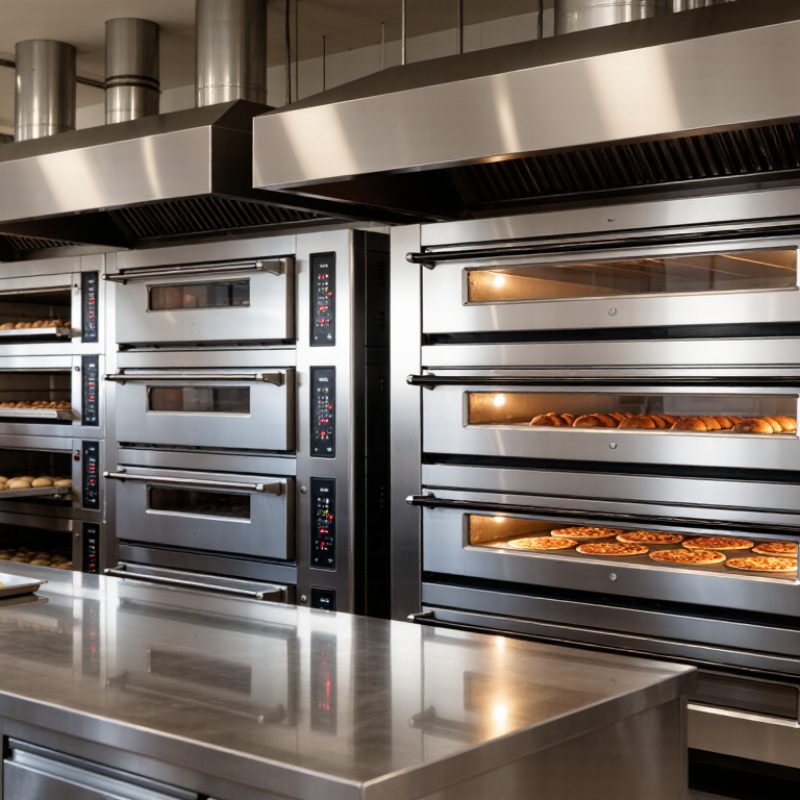
Commercial deck ovens are often judged by maximum temperature, but 500°C alone proves little. A practical range is 200–500°C, covering bread, pastries, roasted dishes, and high-heat pizza. The stone deck stores heat and transfers it steadily through the dough. That creates a firmer base and reduces surface scorching.
The U.S. Department of Energy’s Better Buildings data places cooking equipment near 20–30% of commercial kitchen energy use, depending on workload and operating hours. Energy efficiency matters. ENERGY STAR commercial-oven criteria also examine cooking efficiency and idle energy, not temperature alone. Buyers should request measured recovery time, idle consumption, cavity temperature stability, and heat-up performance. Ask for test conditions, too. A glossy specification sheet can hide weak recovery after loading.
The 2023 ASHRAE Handbook recommends matching kitchen exhaust design with appliance duty and heat release. A 500°C oven may need stronger ventilation, more clearance, and better front-of-house heat control. Stone thickness, insulation, deck height, and independent top-and-bottom controls affect daily results. In commissioning checks, a useful test is loading several identical dough pieces after full preheating. Record the deck temperature before loading, after loading, and five minutes later. Results may expose uneven heating. That is not a failure of the method; it is a reminder that laboratory performance and service conditions differ. Global buyers should also verify voltage, gas type, frequency, local service coverage, and spare-part availability before comparing the leading ten commercial deck oven options.
Top 10 Commercial Deck Oven Brands by Global Range and Service Coverage
Top 10 Commercial Deck Oven Brands for Global Buyers
Top 10 Commercial Deck Oven Brands by Global Range and Service Coverage
Global buyers should compare deck ovens by service reach, not only baking performance. Grand View Research estimated the global commercial kitchen equipment market at about USD 11 billion in 2023. Its analysis highlights energy efficiency, automation, and after-sales support as major purchasing factors. These criteria help separate internationally practical suppliers from regional specialists.
A strong manufacturer usually offers multiple deck sizes, electric or gas heating, digital controls, and stone or ceramic baking surfaces. More importantly, it should provide local technicians, spare-parts stock, installation guidance, and clear warranty terms. Technavio’s commercial foodservice equipment outlook identifies replacement demand and expanding foodservice operations as important market drivers. Yet coverage can look better on paper than in practice. A factory may claim worldwide distribution, while parts still take eight weeks to arrive.
Tips: Ask for service contacts in your target country. Request average repair times and parts availability in writing. Check voltage, gas standards, ventilation needs, and certification requirements before ordering. Energy data also deserves attention. The U.S. Environmental Protection Agency recommends comparing operating efficiency, not just purchase price. A cheaper oven can become expensive through heat loss, downtime, and uneven baking.
Field testing matters. Bake the same dough at different loads. Record recovery time. Inspect door seals after repeated opening. The ranking should reward measurable support, regional inventory, and proven reliability, rather than impressive brochures alone.
Top 10 Commercial Deck Oven Brands for Global Buyers
Global Range and Service Coverage Evaluation Framework
This buyer-oriented framework compares the key dimensions used to assess international commercial deck oven suppliers. The weighting emphasizes after-sales support, spare-parts availability, installation capability, regional distribution, and product-range breadth rather than individual company claims.
Brand Comparison: 1–4 Decks, Independent Heat Zones, and Steam Systems
When comparing leading commercial deck oven brands, buyers should examine deck capacity before chasing impressive specifications. A one-deck oven suits a compact bakery, café, or test kitchen. A four-deck model supports higher output but demands stronger ventilation, power, and staff training. More decks do not always mean better production.
Independent heat zones create practical control. Operators can bake bread on one deck while roasting pastries on another. Each chamber may require different top and bottom temperatures. This reduces product compromise during busy service. Look for responsive controls, stable heat recovery, and clear temperature displays. Small details matter. A door that seals poorly can waste energy and dry the crust.
Steam systems deserve close inspection. Built-in injection can improve shine, oven spring, and crust texture, especially for artisan bread. However, steam performance depends on water quality, drainage, and cleaning access. Ask for documented steam output, maintenance instructions, and service support in the destination country. Electrical frequency, fuel type, voltage, and local installation requirements also need verification. Reliable suppliers should provide test data, warranty terms, and realistic delivery information.
A hands-on trial is still valuable. Place several trays inside and check temperature consistency with independent probes. No comparison is perfect. I would not trust a brochure alone. Some ovens appear efficient until the recovery time becomes visible during a crowded production shift. The best choice balances deck count, heat control, steam reliability, operator skill, and available floor space.
Global Buyer Checklist: EN 203-1, CE, ETL, Warranty, and Parts Support
Top 10 Commercial Deck Oven Brands for Global Buyers
Global buyers should treat EN 203-1 as a starting point, not a complete purchasing decision. This standard addresses safety for gas-heated commercial catering appliances. For European sales, verify the manufacturer’s Declaration of Conformity and CE marking. CE is a compliance claim, not a quality guarantee. The European Commission’s 2023 Safety Gate report recorded 3,412 safety alerts and 4,287 follow-up actions. That figure shows why documents deserve careful review.
ETL listing can support acceptance in North American projects, but buyers should confirm the exact model and installation conditions. Ask for test reports, wiring diagrams, gas specifications, and local approval requirements. Warranty terms also need detail: coverage period, labor exclusions, shipping responsibility, and response time. Parts support matters more than attractive brochures. Request a parts catalog and confirm availability for heating elements, stones, thermostats, door seals, and control boards. Three years of promised support may still feel weak if parts ship slowly.
Tips: Photograph the rating plate before ordering. Match voltage, gas type, frequency, and chamber size with the site. Request two customer references using similar production volumes. Check the service address, not only an email address. I would also test a sample bake, although one test cannot predict every failure. That limitation is easy to overlook. The International Energy Agency’s Energy Efficiency 2023 report emphasizes the importance of efficient equipment and operational control, so record warm-up time and standby consumption during evaluation.