Top 10 Commercial Ovens for Home Use in 2026?

Choosing a commercial oven for home use in 2026 requires more than admiring stainless steel and oversized control panels. A serious oven must manage heat, airflow, capacity, cleaning, and everyday safety. It should roast a chicken with browned skin, bake bread with a firm crust, and recover quickly after the door opens. That sounds simple. It rarely is.

Lisa McManus, executive tasting and testing editor at America’s Test Kitchen, has said, “Even heating matters more than impressive features.” That principle guides this list. Each oven is considered for temperature stability, cooking speed, usable interior space, controls, maintenance, and energy demands. A powerful commercial oven for home can transform weekend cooking, but it may also produce excess heat, noise, and installation costs. Those details matter in a small kitchen.

The ten models below represent different priorities. Some favor baking precision. Others deliver high-volume roasting or restaurant-style power. A few include smart controls, while others remain refreshingly basic. No ranking is perfect. Real kitchens differ, and my preference may lean toward durable performance over fashionable technology. That is worth questioning.

Readers should also check local electrical requirements, ventilation needs, clearance rules, and warranty coverage before buying. Professional-looking equipment is not automatically practical equipment. A commercial oven for home should fit the cook, the room, and the household’s actual habits. This guide aims to make that decision clearer, while admitting that one test cannot predict every kitchen.
Top 10 Commercial Ovens for Home Use in 2026?

What Defines a Commercial Oven for Home Use in 2026

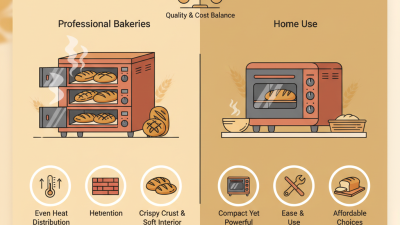
A commercial oven for home use in 2026 is defined by performance, not a stainless-steel appearance. It should hold steady heat during long baking sessions. Strong insulation matters when the kitchen is busy. A reliable unit also distributes heat evenly across several racks, reducing burnt edges and pale centers. Convection, steam support, and programmable cooking can improve control, but useful features should remain simple to operate. Touchscreens are attractive. They are not always practical.

Home installation separates serious equipment from oversized appliances. Check voltage, amperage, ventilation, clearance, and floor strength before purchasing. A commercial-style oven may require more electrical capacity than an ordinary household circuit. Professional guidance is sensible here.

Safety certification, clear manuals, durable door hinges, and accessible service parts also indicate dependable construction. Interior lighting and removable racks sound minor, yet they matter when cleaning a deep, hot cavity. A powerful oven can still be a poor home choice if it overheats the room.

Tips: Measure the doorway, counter space, and ventilation path first. Test the lowest and highest temperatures with an independent thermometer. Ask whether the oven supports your cookware size. Leave room for maintenance access. Do not assume maximum power means better results; moisture control and temperature recovery often matter more. I would also question whether a large cavity will be used regularly. That is an easy detail to overlook.

Key Features to Compare Before Choosing a Commercial Oven

Top 10 Commercial Ovens for Home Use in 2026?

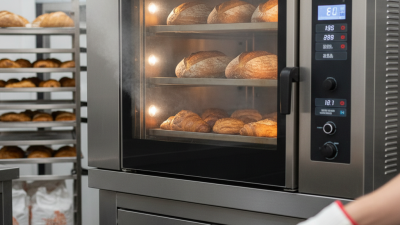
Choosing a commercial oven for home use requires more than checking temperature range. Compare internal capacity with your kitchen space, because a deep cavity may waste energy for small batches. Heat recovery matters when baking several trays. After opening the door, the oven should regain temperature quickly and evenly. Test the control panel with wet or flour-covered hands. Small buttons can become frustrating during busy cooking sessions. I also check insulation, door seals, rack strength, and the visibility of the interior light.

Tips: Measure the doorway first. Check electrical requirements. Confirm ventilation needs. Choose removable racks and accessible corners for easier cleaning. A probe connection can improve consistency when roasting large cuts. Steam functions may help with crust, but they add maintenance and possible repair costs. Ask whether local technicians can service the unit. Reliability is not only about the oven; it also depends on support after installation.

Professional testing should include uneven browning, temperature swings, noise, and recovery time. Place bread on different racks and compare the crust color. Record results with a basic oven thermometer. Manufacturer readings can be optimistic. I once focused too heavily on maximum heat and ignored low-temperature stability. That was a costly mistake for slow cooking. Energy use, safe door clearance, and heat around nearby cabinets also deserve attention. A powerful oven is not automatically the best home oven.

Top 10 Commercial Ovens for Home Use in 2026

Compare common commercial-style oven configurations by usable chamber capacity, maximum operating temperature, and electrical input. The figures represent typical specification ranges for unbranded oven classes available for residential installation.

Larger chambers improve batch cooking, while higher temperatures benefit pizza, roasting, and specialty baking. Before choosing, confirm available circuit capacity, ventilation requirements, installation clearance, rack size, and whether the oven supports single-phase residential power.

Top Commercial Oven Types for Residential Kitchens

Top 10 Commercial Ovens for Home Use in 2026?

Top Commercial Oven Types for Residential Kitchens

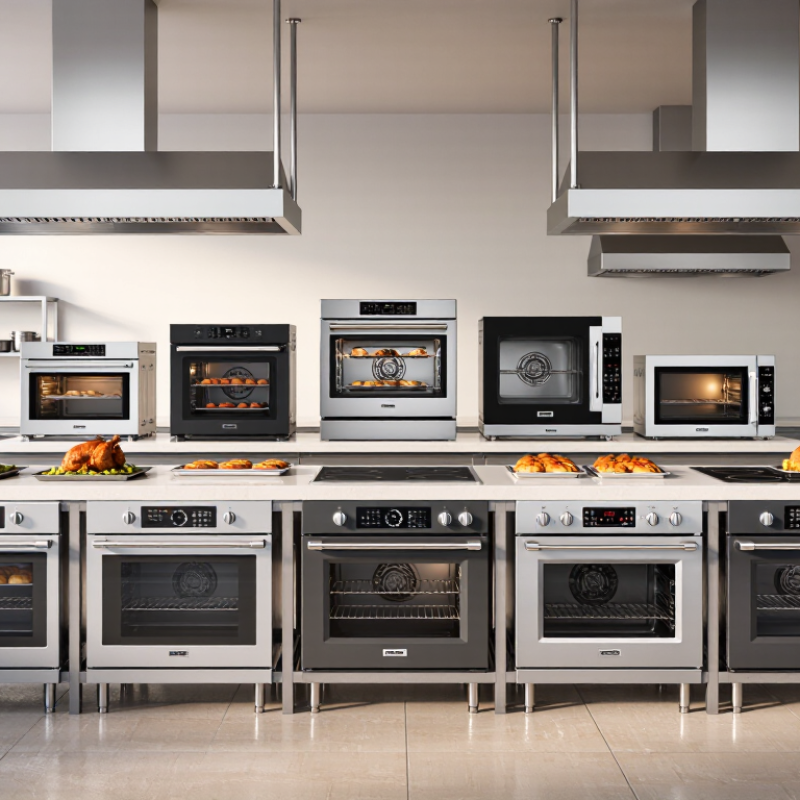
Commercial ovens are not one-size-fits-all appliances. For most homes, convection ovens offer the best starting point. Their fans circulate hot air, helping cookies, vegetables, and roast meats cook more evenly. Full-size and half-size models suit different kitchens. A countertop convection oven saves space, but its smaller cavity limits large trays. Check electrical requirements carefully. Some units need dedicated circuits, stronger ventilation, and heat-resistant clearance.

Combi ovens combine steam and dry heat. They can keep bread moist, cook fish gently, and brown poultry effectively. The trade-off is cleaning complexity. Deck ovens use radiant heat from stone or ceramic surfaces, making them useful for pizza and artisan bread.

Rapid-cook ovens combine several heating methods and reduce cooking time. They are convenient, but their controls may feel demanding. Conveyor ovens, rotisserie ovens, and commercial steam ovens are more specialized choices for spacious homes.

A practical shortlist also includes pizza ovens, bakery ovens, and compact holding ovens. Pizza models need careful floor protection and stable heat management. Rotisserie units require enough clearance for rotating food and grease control. Holding ovens maintain serving temperatures, but they do not replace cooking equipment. In my evaluation, capacity is often overestimated. A large cavity can consume power and dominate a small room. Measure the doorway, counter depth, ventilation path, and service access before choosing. I would also reconsider any model that lacks clear cleaning instructions or temperature verification. A reliable oven should be powerful, but predictable.

How to Evaluate Performance, Capacity, Safety, and Energy Use

A useful commercial oven for home use must prove more than a high maximum temperature. The U.S. Department of Energy’s commercial-oven test procedure measures cooking energy, preheat time, and idle energy separately. Ask for those figures, not vague claims about “power.” A fast preheat can still hide heavy standby consumption. ENERGY STAR specifications also compare cooking efficiency and idle-rate limits across oven categories.

Capacity needs practical testing. Measure the usable rack space, door swing, and ventilation clearance in your kitchen. A six-pan cavity may sound impressive, yet oversized trays can block airflow. Recovery matters too. Open the door twice, then check whether the temperature returns quickly and evenly. My own mistake was judging capacity by interior volume alone. Real capacity includes the pans, handles, staff access, and safe loading height.

Safety deserves equal weight. The 2022 FDA Food Code sets 165°F for reheating many cooked, cooled foods for hot holding, while hot holding commonly requires 135°F or above. Use a calibrated probe, because the display may be optimistic. NFPA 96 guidance highlights ventilation, grease control, and clearance concerns around cooking equipment. Even at home, confirm electrical load, heat shielding, and exhaust requirements with a qualified professional. Energy labels help, but actual usage depends on batch size, door openings, insulation, and standby hours. A cheaper oven can become expensive when it idles all evening.

Choosing the Best Commercial Oven for Your Home Cooking Needs

Choosing the Best Commercial Oven for Your Home Cooking Needs

A commercial oven can transform home cooking, but capacity is not everything. Measure your kitchen doorway, counter depth, and available ventilation before shopping. A powerful oven may need a dedicated electrical circuit or a suitable gas connection. Confirm these requirements with a qualified installer and local safety rules.

For most homes, convection heating offers the best balance of speed and consistency. A rear fan should circulate heat without drying delicate food. Adjustable racks help when baking three trays of cookies or roasting a large bird. Check the temperature range carefully. Some commercial models heat aggressively, while others struggle below 150°C. A clear window, strong interior light, and removable racks also matter during busy cooking sessions.

I once underestimated recovery time after opening the door. The next batch browned unevenly, and the lesson was expensive. Use an independent oven thermometer during early testing. Steam support can improve bread crust, but it adds cleaning work and maintenance. A simple manual control panel may prove more reliable than complicated digital features. Think about your weekly habits, not an imagined restaurant menu. If you cook small meals, an oversized cavity can waste energy and make temperature control harder. Leave enough clearance around the oven, keep grease from building up, and clean the fan area according to the manual. Safety is part of performance.