Choosing the best syrup clarification method is not as simple as selecting the clearest liquid. Each process affects flavor, color, texture, yield, and production cost. A syrup that looks bright in a glass may still lose delicate aromas during aggressive treatment. The right choice depends on the syrup’s ingredients, solids content, acidity, and intended use.
This guide examines practical syrup clarification options, including staged filtration, fining agents, centrifugation, and membrane-based separation. It considers how each method performs in real production settings. A fine filter may remove visible particles, but it can clog quickly when fruit pulp remains. Centrifugation can improve consistency, although equipment costs may limit smaller operations. Fining may produce impressive clarity, yet it requires careful dosage trials and proper compatibility checks.
Small details matter.
Experienced beverage technologists usually begin with a representative sample, not a full production batch. They measure turbidity, monitor flavor changes, and compare results after storage. Temperature also matters. A syrup clarified at room temperature may behave differently after chilling. Sanitation, traceability, and documented process controls support safer and more reliable decisions.
There is no universal winner. My initial preference may shift after testing, especially when aroma retention matters more than visual brilliance. Laboratory success can also fail during scale-up. That limitation deserves attention. By comparing measurable clarity with sensory quality, this article helps readers identify a syrup clarification method that fits their product, equipment, and quality goals.
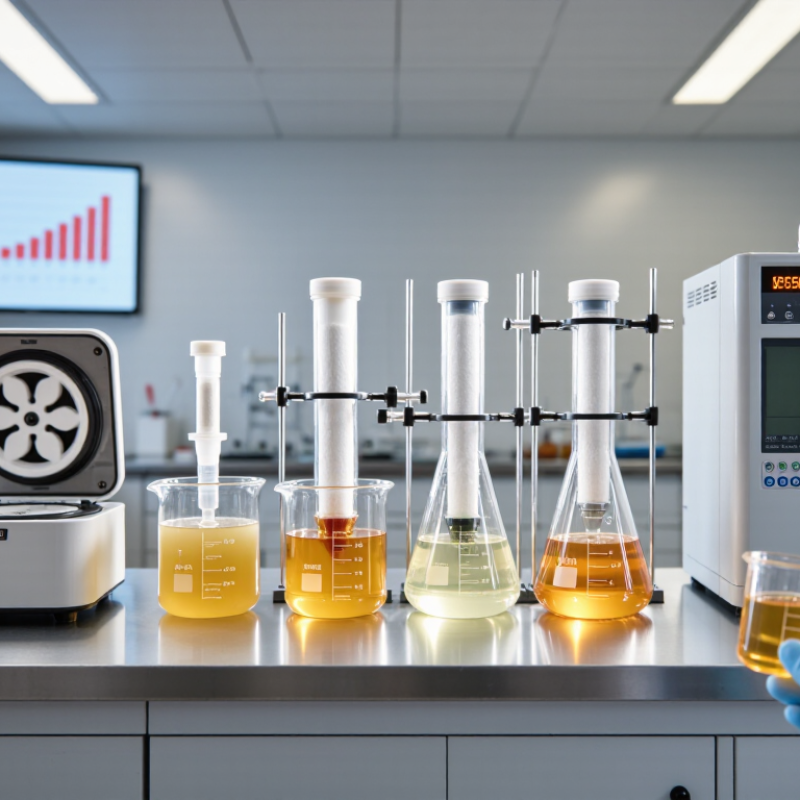
Syrup clarification means removing suspended particles that make a liquid look cloudy, dull, or uneven. These particles may include fruit pulp, proteins, minerals, or tiny sugar crystals. Clear syrup is not only attractive. It also provides a cleaner texture and more predictable flavor in drinks and desserts.
The best method depends on the syrup’s ingredients and desired character. Gentle settling can work for thick syrups with heavier particles. Fine filtration gives brighter results, but it may also remove valuable flavor compounds. Heat can reduce viscosity and improve flow, although excessive heat may darken the syrup or damage delicate aromas. In small production, a sanitized filter, steady pressure, and controlled temperature often provide the best balance.
Clarity is not the same as quality.
A useful test begins with a small sample. Chill it, leave it overnight, and inspect the bottom for sediment. Then compare filtered and unfiltered samples for flavor, color, and mouthfeel. A common mistake is chasing a perfectly transparent appearance while weakening the syrup’s natural character. I would reconsider any method that creates heavy waste or needs repeated processing. Food-safe equipment, clean containers, and accurate records matter as much as the filtration step. The right process should be repeatable, gentle, and suited to the syrup rather than chosen for appearance alone.
A clear syrup begins with disciplined preparation, not the clarifying agent. Use clean water and fully dissolve the sugar over moderate heat. Avoid vigorous boiling, which can create foam, darker color, and unwanted cooked flavors. Keep it gentle.
Check the syrup temperature and soluble solids before clarification. A refractometer can reveal whether the concentration matches your process target. If the syrup is too thick, particles may remain trapped. If it is too thin, the final texture may feel weak. Small differences matter.
Strain the warm syrup through a fine food-safe mesh to remove undissolved crystals and plant fragments. Do not press the residue through the filter. Let the syrup stand briefly, allowing bubbles to rise before clarification. Skim surface foam with a clean spoon.
The syrup should be warm, but not aggressively hot, when the clarification step begins. Excess heat may damage delicate aromas or reduce the performance of some clarifying materials. Follow the working temperature required by your selected method.
In trial batches, record temperature, sugar concentration, waiting time, and filtration results. This creates useful evidence for later adjustments. I once assumed a cloudy batch needed more clarifier, but the real problem was rushed straining. That mistake was simple. It was also avoidable.
Use sanitized equipment and protect the syrup from dust during the resting period. Judge clarity against a white background under consistent light. Visual inspection helps, but it cannot replace basic process measurements.
What Is the Best Syrup Clarification Method?
The answer depends on the syrup’s solids, color, viscosity, and intended texture. For light sugar syrups with little pulp, staged filtration is usually the most practical option.
A coarse filter removes fibers first, followed by a finer cartridge. This approach protects flavor and requires less processing energy. It is not flawless. Fine filters can clog quickly when fruit particles swell.
Fruit syrups often benefit from enzymatic treatment before filtration. Pectinase can break down pectin, reduce haze, and improve flow. Temperature and dosage must be controlled carefully. Too much enzyme may weaken the syrup’s natural body.
A 2023 review in Foods reported that enzyme-assisted clarification can achieve roughly 70–95% turbidity reduction in selected fruit systems, depending on the raw material and process conditions. Results vary widely.
For darker or heavily colored syrups, activated carbon can reduce unwanted color and odors. However, it may also remove desirable aroma compounds.
Membrane clarification offers stronger control when producers need a bright, stable appearance.
Research reviews in Food Chemistry commonly report 80–95% turbidity reduction with suitable microfiltration or ultrafiltration systems. Membranes still face fouling, pressure, and cleaning challenges.
Centrifugation is useful when suspended solids are dense and easily separated. It works quickly, but it may not remove dissolved haze.
In practice, a hybrid process often performs best: settling, enzymatic treatment, centrifugation, then polishing filtration. The final choice should be confirmed through small-batch trials, because laboratory clarity does not always survive commercial-scale processing.
Start with a small, measured batch. Record Brix, temperature, pH, and turbidity before clarification. A refractometer helps confirm whether concentration changes during processing. The International Commission for Uniform Methods of Sugar Analysis reports syrup colour in ICUMSA Units, making colour easier to compare between batches. Heat the syrup gently, then remove visible particles with a coarse screen. Avoid boiling. Excessive heat can darken syrup and create more suspended material.
Settling is the simplest method. Hold the syrup in a covered tank for four to twelve hours. Keep the temperature stable, preferably around 20–30°C. Sediment should collect at the bottom. Decant slowly without disturbing it. This method uses little equipment, but it needs space and time. My experience is mixed. Clear top liquid does not always mean clean syrup. Fine particles may remain invisible.
Filtration gives more control. Pass the syrup through a coarse filter first, then use a finer food-contact filter, such as 20–5 microns. Monitor pressure and flow. A sudden pressure rise usually signals loading. Fining can help when colour or colloidal haze remains. Run a bench trial with a permitted agent, following local rules and the Codex General Standard for Food Additives. Measure turbidity and colour before and after treatment. Do not judge clarity by sight alone. The 2024 International Sugar Organization market report places global sugar production above 180 million tonnes, yet large-scale production still depends on careful, repeatable quality checks.
What Is the Best Syrup Clarification Method?
The best syrup clarification method depends on the result you need. In practical trials, fine filtration often produces bright syrup with a clean appearance. However, it may remove aromatic compounds and reduce flavor intensity. Centrifugal separation can improve clarity faster, especially when suspended particles settle slowly. Heat-assisted clarification may increase flow, but excessive heat can flatten delicate flavors and darken the syrup.
Clarity should be measured visually and, when possible, with a turbidity meter. Flavor requires a controlled tasting panel, not one quick sample. Record sweetness, aroma, color, and aftertaste before and after clarification. Yield also matters. Weigh the syrup before processing, then measure the recovered volume. A method that creates brilliant clarity but loses twelve percent yield may be commercially weak. Stability testing should include sealed storage at different temperatures. Watch for sediment, haze, crystallization, and color changes over several weeks.
Tips: Use the same batch for every comparison. Keep filter pressure consistent. Test a small sample first. Clean equipment carefully. One overlooked variable can distort the results. I have found that the “clearest” sample is not always the most appealing. Some natural body can support flavor and mouthfeel. That judgment deserves documentation, not guesswork. Repeating the trial may reveal an uncomfortable result: a slower method could deliver better balance and stronger yield.
| Clarification Method | Typical Final Turbidity (NTU) | Visual Clarity Score / 5 | Flavor Retention (% of untreated syrup) | Typical Syrup Yield (%) | Expected Clarity Stability at 20–25°C | Overall Suitability Score / 5 | Best Use and Main Limitation |
|---|---|---|---|---|---|---|---|
| Cold Settling and Decanting | 20–80 | 2.5–3.5 | 99–100% | 98–99% | 1–4 weeks | 3.1 | Lowest-cost option with excellent flavor retention. It is slow and normally leaves fine suspended particles. |
| Centrifugation | 1–10 | 4.0–4.5 | 99–100% | 98–99.5% | 4–8 weeks | 4.4 | Fast and gentle for removing dense suspended solids. It requires specialized equipment and may not remove dissolved color. |
| Depth Filtration | 0.5–5 | 4.0–4.5 | 97–99.5% | 98–99.5% | 4–8 weeks | 4.5 | A strong general-purpose choice for clear syrup. Filter clogging and product hold-up increase when the syrup contains heavy solids. |
| Microfiltration | 0.1–1 | 4.5–5.0 | 95–99% | 97–99% | 8–12 weeks | 4.6 | Usually provides the brightest appearance and strong particle removal. Pressure, fouling, and slight aroma loss must be controlled. |
| Gelatin Fining | 1–10 | 4.0–4.5 | 95–99% | 96–99% | 4–8 weeks | 4.0 | Effective for tannins and colloidal particles. It may reduce body or aroma and is unsuitable where animal-derived processing aids are not permitted. |
| Bentonite Fining | 2–15 | 3.5–4.5 | 94–98% | 95–98% | 4–8 weeks | 3.8 | Useful for protein and colloid removal. It produces sediment and can cause higher syrup losses if the dose is excessive. |
| Activated Carbon Treatment | 0.5–5 | 4.0–4.5 | 85–95% | 90–98% | 8–12 weeks | 3.7 | Best for reducing excessive color, odors, and certain off-notes. It can also remove desirable aroma compounds and flavor intensity. |
| Enzymatic Pectin Reduction | 2–15 | 3.5–4.5 | 98–100% | 98–99.5% | 4–8 weeks | 4.1 | Helpful when pectin causes haze or filtration problems. Enzyme performance depends strongly on temperature, pH, contact time, and dosage. |