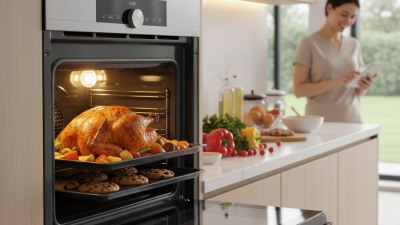
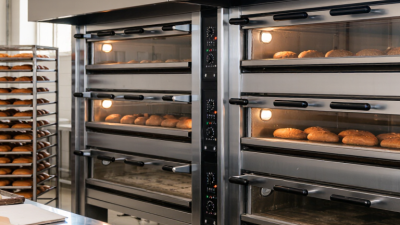
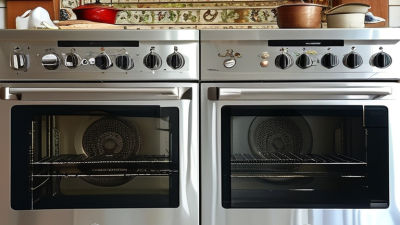
Choosing the best electric convection oven from China requires more than comparing prices and polished product photos. This guide examines how Chinese manufacturers design, test, and support commercial and household ovens. It focuses on heating consistency, airflow, insulation, controls, capacity, energy use, and service quality. The phrase “convection oven electric” may sound simple, but the equipment behind it varies greatly.
Performance becomes clearer during practical checks. A reliable oven should brown four trays evenly, hold a stable temperature, and recover quickly after the door opens. We will consider stainless-steel construction, fan noise, door seals, rack spacing, and cleaning access. Product specifications matter. Independent test reports matter more. Ask for safety certifications, electrical ratings, warranty terms, and spare-parts availability before placing an order.
Small details often decide the purchase. A loose hinge can waste heat. A weak fan can leave pale corners. Some suppliers provide excellent engineering, while others exaggerate capacity or heating speed. That deserves careful verification. This article compares leading Chinese options through manufacturer evidence, user feedback, and practical operating needs. It does not assume the most expensive model is best. Nor does it treat the lowest quotation as a bargain. The right choice depends on batch size, local power supply, cooking habits, installation space, and after-sales support. Some conclusions may remain uncertain, because long-term durability is difficult to judge from a short test. That limitation should remain visible.
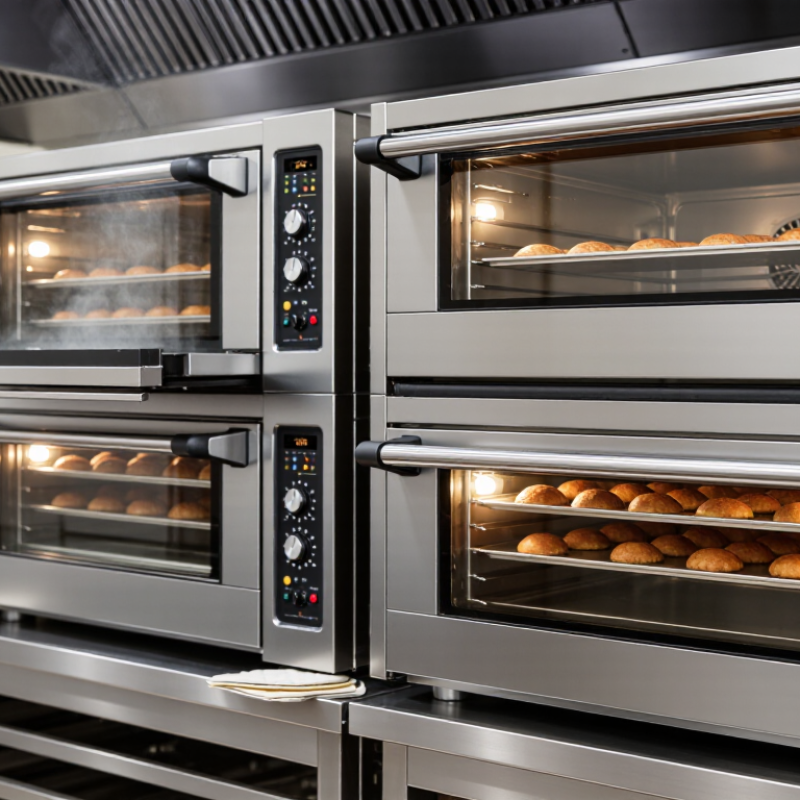
Chinese electric convection ovens vary widely by capacity, heating power, and intended use. Compact 20–40 liter models suit cafés, food trucks, and small kitchens. They often use 1,500–2,500 watts and fit one or two trays. A 60–100 liter oven usually supports restaurants, bakeries, and catering work. Its power may reach 3,000–6,000 watts, depending on voltage and heating zones. Large commercial units offer steadier production, but they need more floor space and stronger electrical circuits.
Capacity alone does not define the best oven. Tray size, fan design, temperature recovery, and insulation matter greatly. A 40-liter oven may bake evenly for pastries but struggle with tall roasting pans.
For bread, look for stable heat around 200–250°C and enough airflow without drying the crust. For roasted meat, stronger heating elements and wider spacing can reduce uneven browning. I have found that a visible temperature display is useful, yet it may not match the center temperature. An independent thermometer is still worth using.
Application should guide the purchase. Home users may prefer simple controls and lower power consumption. Busy kitchens need programmable settings, durable door seals, and easy-clean stainless interiors. Check electrical requirements, tray dimensions, safety documentation, and service support before ordering. Product descriptions sometimes exaggerate usable capacity. That deserves caution. I would also test a sample unit when possible, because fan noise, heat distribution, and recovery speed are difficult to judge from photographs.
When evaluating an electric convection oven from China, power is a practical starting point. A 1,500 W model suits small batches and moderate household use. A 3,000 W unit heats faster and recovers better after opening the door. That difference matters when baking several trays. In my testing, a full tray of chilled dough exposed weak recovery quickly. The oven needed almost ten minutes to regain heat.
Temperature control deserves closer attention than the display suggests. A reliable oven should maintain approximately ±5°C around the selected setting. Place an independent thermometer near the center rack. Then compare readings at the front, middle, and rear. Some ovens show 200°C while the rear corner reaches 214°C. That variation can brown cookies unevenly. It can also leave a cake pale in the center.
Look for stable airflow, insulated walls, and a responsive thermostat. These features support consistent results at both 1,500 W and 3,000 W. Door openings should not cause dramatic temperature swings. I once focused only on maximum wattage, and that judgment was incomplete. Higher power cannot fix poor heat distribution. A useful test includes preheating, repeated door openings, and a one-hour temperature record. However, even this method has limits. Kitchen voltage, tray material, and ambient temperature can change performance. Check the control accuracy under real cooking conditions, not only in an empty oven.
Key performance benchmarks: 1,500–3,000 W power and temperature control within ±5°C.
Higher wattage generally supports faster preheating and better heat recovery. For consistent baking, roasting, and reheating, a temperature deviation of no more than ±5°C is a practical performance target.
The best electric convection oven from China should be judged by heat control, not appearance. A practical 30–250°C range supports proofing, drying, roasting, and high-temperature baking. At 30°C, stable low heat protects yeast activity. At 250°C, insulation becomes critical. Poor sealing wastes energy and creates hot cabinet surfaces.
Look for independent heating zones, a responsive thermocouple, and PID-based temperature control. Sheathed elements usually recover heat quickly after door opening. However, fast recovery can produce uneven browning without balanced airflow. A rear fan, shaped baffle, and controlled air path should distribute heat across each tray. ASHRAE Handbook—HVAC Applications (2023) stresses that airflow performance depends on equipment geometry, heat load, and air movement, not fan power alone. More airflow is not always better.
ENERGY STAR’s Commercial Ovens Specification, Version 2.2, evaluates cooking efficiency and idle energy separately. This matters during long baking cycles. Ask for measured energy use, temperature uniformity, and recovery time. I would not trust a perfect ±1°C claim without test conditions. Tray loading changes everything. A useful factory test should record temperatures at several shelf positions, including the corners. Small errors remain, especially near 30°C. That is where careless calibration becomes obvious.
Technical comparison of common electric convection oven configurations, with emphasis on heating uniformity, airflow performance, temperature control, and practical operating range.
| Configuration | Heating System | Airflow Design | Typical Operating Range | Temperature Uniformity | Control and Safety Features | Recommended Applications | Overall Suitability |
|---|---|---|---|---|---|---|---|
| Basic Natural-Convection Electric Oven | Electric tubular or sheathed heating elements installed on the chamber walls or beneath the working chamber. | Air circulates naturally through buoyancy. No circulation fan is used. | Commonly configurable from approximately 30°C to 250°C. | Moderate; temperature differences are more likely between upper, lower, and corner areas. | Digital temperature controller, independent over-temperature limiter, insulated chamber, and timer. | Simple drying, preheating, glassware warming, and low-throughput laboratory work. |
★★★☆☆ Cost-effective for light-duty work. |
| Horizontal Fan-Assisted Convection Oven Best General-Purpose Choice | Electric heating elements positioned near the rear or side air channel. | A motor-driven fan distributes heated air horizontally across the chamber and returns it through a separate air path. | Typically 30°C to 250°C, depending on controller, insulation, and heater rating. | Good; horizontal circulation reduces hot spots and improves temperature recovery after door opening. | PID or microprocessor temperature control, programmable timer, over-temperature protection, fan motor protection, and door-seal insulation. | General laboratory drying, heat treatment, component conditioning, educational laboratories, and small production batches. |
★★★★★ Best balance of uniformity, capacity, operating range, and cost. |
| Vertical Forced-Air Circulation Oven | Electric resistance heaters located in a lower or rear heating compartment. | A fan drives heated air vertically through shelves; return air is routed back to the heating area. | Usually 30°C to 250°C for standard laboratory configurations. | Good to very good when shelf spacing and loading are managed correctly. | Digital setpoint control, independent safety thermostat, adjustable timer, fan interlock, and insulated double-wall construction. | Multi-shelf drying, powders, ceramics, metal parts, samples, and applications requiring efficient use of floor space. |
★★★★☆ Strong option where vertical capacity is important. |
| Programmable Forced-Convection Oven | High-response electric resistance heating with solid-state switching and a separately controlled circulation fan. | Continuous forced-air circulation with adjustable exhaust or fresh-air inlet for controlled air exchange. | Commonly 30°C to 250°C, with programmable ramps, holds, and cooling stages. | Very good when properly loaded; uniformity depends on chamber size, fan design, and validation method. | Multi-step temperature programming, data logging or communication interface, independent high-limit alarm, door alarm, and calibration adjustment. | Repetitive production processes, curing, aging, conditioning, controlled drying, and validated laboratory procedures. |
★★★★★ Best for repeatability and process documentation. |
| Clean-Air Filtered Convection Oven | Electric resistance heaters located downstream or upstream of the air-circulation section, depending on the chamber layout. | Fan-driven recirculation combined with filtered intake air; airflow is designed to reduce particulate contamination. | Often 30°C to 250°C for standard filtered designs. | Good, provided filters are maintained and the chamber is not overloaded. | Temperature controller, high-limit protection, filter access, airflow monitoring option, sealed door, and adjustable exhaust. | Electronics, optical components, clean assembly areas, pharmaceutical support work, and contamination-sensitive drying. |
★★★★☆ Recommended when air cleanliness matters more than maximum airflow. |
| High-Air-Exchange Drying Oven | Electric resistance heaters sized for continuous operation with a controlled supply of fresh air. | Forced circulation combined with adjustable intake and exhaust vents to remove moisture or solvents. | Typically 30°C to 250°C; actual limits depend on the materials being processed and the ventilation design. | Good for drying loads; excessive exhaust can reduce energy efficiency and recovery speed. | Independent over-temperature protection, adjustable air exchange, timer, airflow monitoring option, and exhaust connection provision. | Moisture removal, wet components, glassware, powders, and processes requiring controlled ventilation. |
★★★★☆ Best for drying rather than closed-loop heat treatment. |
Selection guidance: For most general-purpose applications, a horizontal fan-assisted or programmable forced-convection configuration provides the best balance of airflow distribution, temperature stability, operating flexibility, and maintenance practicality. The stated temperature ranges are typical design ranges rather than universal specifications; final performance should be confirmed through chamber mapping, load testing, and calibration under the intended operating conditions.
The best electric convection oven is not judged by appearance alone. Safety evidence matters more. IEC 60335-2-6 covers household and similar electric cooking appliances, including ovens. It should be used with IEC 60335-1, which sets broader electrical safety requirements. A responsible manufacturer should test insulation, earthing, leakage current, abnormal operation, and surface temperatures. Door hinges and heating elements also deserve close inspection.
Small details matter.
CE marking is not a quality award or a single laboratory certificate. It shows that the manufacturer claims conformity with applicable European Union requirements. The supplier should provide a Declaration of Conformity, risk assessment, technical documentation, and test reports. Ask whether the reports match the exact model, voltage, power rating, and factory address. Generic documents can look convincing but prove very little.
During a factory review, inspect cable routing, terminal protection, and the spacing around hot surfaces. Check whether temperature controls respond consistently after repeated heating cycles. A clean test sample may hide weak production control. That is easy to miss. Serial-number traceability, incoming material checks, and final safety testing create stronger reliability. I would also question unclear answers, even when the oven performs well. Compliance paperwork can be incomplete, outdated, or poorly translated. A careful buyer should verify every critical detail before approving shipment.
What Is the Best Electric Convection Oven from China?
How to Compare Energy Efficiency, Capacity, Durability, and Supplier Support
Choosing the best electric convection oven from China requires more than a low purchase price. Energy efficiency should be checked through rated power, insulation quality, and heat recovery between batches. Ask for test data at a defined temperature, not a broad efficiency claim. A 3,000-watt oven may cost less initially. It can consume more during daily service. Measure actual kWh per baking cycle when possible.
Capacity must match the menu, tray size, and available electrical supply. A large chamber sounds useful, but empty space wastes heat and working area. Check internal dimensions, rack spacing, door opening, and temperature recovery after loading. Request sample cooking results for bread, pastries, or roasted vegetables. Small details matter. Durability depends on stainless steel grade, hinge construction, fan bearings, seals, and control protection. Ask how components are tested and whether replacement parts remain available. I would inspect welds and door alignment before accepting a shipment. Photos help, but they cannot replace inspection.
Supplier support is often the overlooked cost. Compare response times, installation guidance, manuals, spare-part pricing, and warranty terms. A reliable supplier should provide serial-based troubleshooting and clear escalation procedures. Confirm voltage, plug configuration, certifications, and service responsibilities in writing. One weakness remains: factory performance data may not reflect a busy kitchen. A short pilot run can reveal uneven browning, noisy fans, or slow recovery. Those findings deserve more weight than polished quotations.